

New Delhi, IndiaWritten By: Lt Gen PR Shankar (Retd)Updated: May 18, 2024, 03:47 PM IST
Published in WION News @ https://www.wionews.com/opinions-blogs/rise-of-rockets-and-missiles-in-conflicts-722719
STORY HIGHLIGHTS
The Armenia and Azerbaijan conflict indicated how conventional wars will be fought using rockets, missiles, drones, and artillery. While its highlight was the extensive use of drones to complement conventional artillery, it also featured the heavy use of missiles and rocket artillery.
While drones have revolutionised the battlefield, it is the rise and proliferation of rockets and missiles that has impacted the battlefield and geostrategic statecraft. Their widespread employment in conjunction with traditional artillery and aircraft is the new battlefield paradigm. The global inventory of rockets and missiles has expanded geometrically. Firepower has changed drastically as rockets and missiles have been employed as geopolitical tools of coercion, as conventional weapons in battle and as a tool of power by non-state actors.
The Geopolitical Tools of Coercion
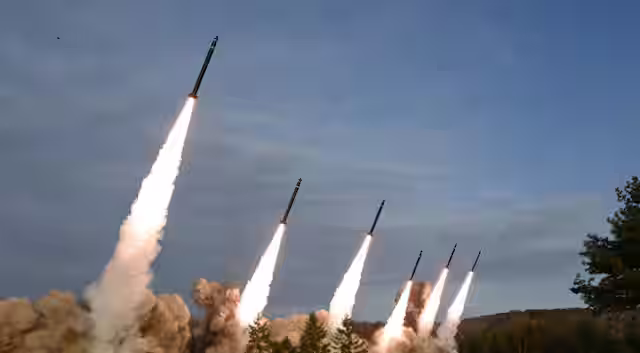
North Korea pioneered provocative testing cum demonstrative firings of missiles and rockets as geopolitical tools of coercion since the late 70s. Initially, North Korean missiles had 50% failures. Current failure rates are only around 15%. As missile reliability improved, the North Korean threat has increased. In 2024, North Korea tested a cruise missile and IRBMs with hypersonic glide capability thrice. It keeps threatening the United States, South Korea and Japan through such firings. North Korea keeps firing a mix of unguided rockets, guided missiles and cruise missiles to keep the Eastern Pacific destabilised. It also conveys nuclear ambiguity through missile testing. It even fires conventional rockets mixed with tube artillery near inhabited areas to explicitly threaten and coerce South Korea.
China has a vast array of modern missiles and rockets. The PLARF is the largest ground-based missile force on earth. China regularly carries out large-scale rocket and missile firing demonstratively along with naval and air exercises to threaten and coerce Taiwan. The larger message is to demonstrate China’s resolve and capability to annex Taiwan, fight and win wars and project power globally. China uses the PLARF to convey its credibility and capabilities of nuclear deterrence and counterattack, strengthen intermediate and long-range precision strike forces, and enhance strategic counter-balance capability. It is a potent threat to China’s neighbours and adversaries. It also gives the PLA the ability to influence local, regional, and global military conflicts. In simple terms, it is geopolitical coercion on a global scale.
Rockets and Missiles in Conventional Battles
The Armenia and Azerbaijan conflict indicated how conventional wars will be fought using rockets, missiles, drones, and artillery. While its highlight was the extensive use of drones to complement conventional artillery, it also featured the heavy use of missiles and rocket artillery. This aspect has largely gone unnoticed. Both sides deployed and employed a range of rockets and missiles. These were a combination of legacy systems of the USSR era as also modern systems procured from different sources individually. Azerbaijan invested more into its rocket and missile arsenal to include guided rockets and MLRS systems to engage targets up to 200 km in depth. The balance tipped in Azerbaijan’s favour due to better drones and rocket artillery and a willingness to use them in an innovative and integrated manner.
The violence of firepower and its centrality in battle is reinforced in the Ukraine war. Employment of guns, rockets and missiles – guided, cruise and hypersonic has been unrestricted, imaginative and extensive. Major lessons have been drawn. Terrain, ground or weather might deter, inhibit or preclude the employment of Air, Infantry and Armour but nothing deters long-range Artillery. It overcomes terrain friction by striking deep. Despite static front lines, the daily situation changes due to orchestrated firepower strikes across the battlefield. Long-range vectors generate strategic as well as battlefield manoeuvre. They have been used to achieve political aims by deliberate firing on specified targets. Russia has postured with nuclear warheads and fired conventional warheads to achieve deterrence. It has done so through extensive use of air, hypersonic/cruise/guided missiles, rockets, and guns to deter NATO from getting directly involved. Ukraine uses rockets and cruise missiles imaginatively to deliver crucial blows to Russia. It has sunk a large part of the Russian Navy. Rockets and missiles have been used innovatively in executing ‘firepower ambushes’, undertaking ‘track and kill’ operations and carrying out ‘spoiling attacks’. A major factor which has emerged is that rockets and missiles used in conjunction with drones and a good command and control system dominate conventional battlefields.
The Non-State Tool of Power
The Houthi movement to grab power in Yemen is decades old. When the Saudis intervened, Iran stepped in. It provided the Houthis with a liberal supply of rockets and missiles. Once Saudi Arabia and Iran got involved, the Yemen civil war acquired local, regional and international flavours. “The Missile War in Yemen” marks the rise in the use of rockets and ballistic missiles by nonstate actors/proxies. Houthis have fired innumerable rockets and missiles locally at Yemen’s Government and Saudi bases, population centres, and infrastructure to trigger a humanitarian crisis. Regionally, Houthis have used a combination of cruise missiles, unguided rockets, ballistic missiles and armed unmanned aerial vehicles (UAVs) to attack Saudi Arabia. The most spectacular being the 2019 ARAMCO attacks of Abqaiq and Khurais oil refineries. The Houthi SAMs have downed many Saudi coalition force aircraft. Their rocket and missile arsenal has secured a power-sharing agreement in Yemen. The Houthis are exercising ‘sea denial’ from land by firing drones and anti-ship cruise missiles against international shipping, oil tankers and U.S. Navy warships in the Red Sea. The Houthi arsenal of long-range missiles and drones has complicated the prospect of restoring peace and stability in West Asia or normalising international trade.
The Iran-backed Hezbollah is the world’s most heavily armed non-state actor, described as ‘a militia trained like an army and equipped like a state’. Its rocket and missile arsenal is arrayed against Israel. Hezbollah’s missile inventory is mostly unguided surface-to-surface artillery rockets which lack precision or lethality. However, sheer numbers and volume make them potent weapons of terror. From the 2006 Lebanon war to now, they have expanded from 15,000 rockets and missiles to about 130,000-150,000. Hezbollah uses them as tools of terror and deterrence.
Hezbollah’s ‘shoot and scoot’ tactics make detection, suppression and retaliation extremely difficult. It negates Israeli airpower. Hence, Hezbollah and Israeli troops are on equal footing in battle. It gives an advantage to Hezbollah which fights from behind a civilian façade like all non-state actors. Hezbollah and Houthi forces are collaborating to develop and employ rockets and missiles against Israel. Hezbollah is pushing to acquire longer-range precision-guided munitions. It has some rockets and missiles with a range of up to even 250 km. This is feasible due to the proliferation of missile technology by Iran.
Hamas was estimated to possess around 6000 rockets in a mix of short (15-20 km), medium ( 45 km) and long (100-200 km) range rockets. Hamas has adapted ideas from the Houthis and Hezbollah with Iranian assistance. Hamas specialises in making crude rockets using water pipes and filling them with any available explosive. Though erratic, they strike terror and make defiant political statements. Hamas uses civilian infrastructure and tunnels to camouflage and store these weapons. Hamas used to fire rockets into Israel from civilian areas of the Gaza Strip. It demonstrates their power to retaliate and even needle Israel to pursue their aims. These have also been used by Hamas to provoke Israel into indiscriminate retaliatory action and enmesh it in a humanitarian trap like they have done in the ongoing conflict.
Iran’s rockets and missile power were on display in its recent demonstrative strike on Israel. The strategic message in that strike is that sheer numbers and volumes can overwhelm air defences. Iran also proliferates rockets & missiles to most of the non-state actors in West Asia. This enables Iran to project power and gain recognition of being an important player in the region. Iran is a case study in power projection far beyond borders without a strong navy or Air Force. Iran has offset this deficiency with its missile arsenal. Incidentally, this tactic is being used by China against the USA in the Western Pacific and against India in the Himalayas.
The Rise of Rockets and Missiles
Rockets and missiles are the choice tools of power, coercion and terror for the state as well as non-state actors. Their enhanced ranges outpace conventional artillery or aircraft. When combined with drones, they expand and threaten every corner of the battlefield. They have heralded a new vista of non-contact warfare with positive escalatory controls. They are also cheaper and far less complicated than air forces to acquire and maintain. They are flexible in employment and light on training and infrastructure requirement. The array of rockets and missiles is vast and can be produced through crude methods as also sophisticated processes as per capability and requirement. Rockets and missiles can be used as weapons of terror and mass destruction interchangeably. Their visual impact is high with enhanced propaganda value. They are capable of precision over longer ranges, unlike guns. Their survivability against air defences is far higher than aircraft. Very importantly they can be employed in conventional and nuclear roles. Technology gives better options in producing and employing rockets and missiles en masse. Modern missiles with higher speeds, range, navigation, advanced materials, and endurance can be developed at speed through dual-use space technologies. The evolution of hypersonic missiles is a new chapter on the horizon. The use of rockets and missiles combined with drones and satellite systems backed by AI-driven command and control systems is deadly and set to grow in modern warfare.
The Indian Scene
While there is some clamour for a Rocket Force in India, we need to see it in perspective. India has the technology and wherewithal to produce any kind of rocket or missile. It has a reasonable inventory and adequate capability to accelerate production. What it lacks is the vision to put it all together. A major part of the inability is a lack of Recce Strike Integration thinking. Integration of surveillance and long-range firepower through a dedicated command and control system is sorely lacking. More importantly, a national strategy is lacking. ISRO and DRDO don’t exactly see eye to eye. Each Service has its own philosophy at variance with the other. The Army myopia reduced the number of rocket regiments in its long-term plans! As the ranges of engagement have increased, the Indian Artillery, which incidentally is the most modern Arm of the Army, has been stripped of integral deep surveillance and targeting capability! Believe it or not! Over time, long-range and aerial observation capability birthed in Artillery has been bifurcated from it by our ‘Dritharashtric’ planners. While the rest of the world is integrating firepower, surveillance and observation through repurposed apps in battle, we have systematically disintegrated our structure! No. We do not need a rocket force. We need integrated thinking and jointness. We sorely lack that at almost every level.
(Disclaimer: The views of the writer do not represent the views of WION or ZMCL. Nor does WION or ZMCL endorse the views of the writer.)
)
Lt Gen PR Shankar (Retd)
Short Bio. Lt Gen PR Shankar (Retd) is a former Director General of Artillery. He is currently a professor in the Aerospace Department of IIT Madras. He has a popular YouTube Channel and Website named Gunners Shot

 Gunners Shot
Leave a reply to Captain Kiran N Khankhoje Cancel reply